Preschool Math Skills Kids Learn Through Everyday Play
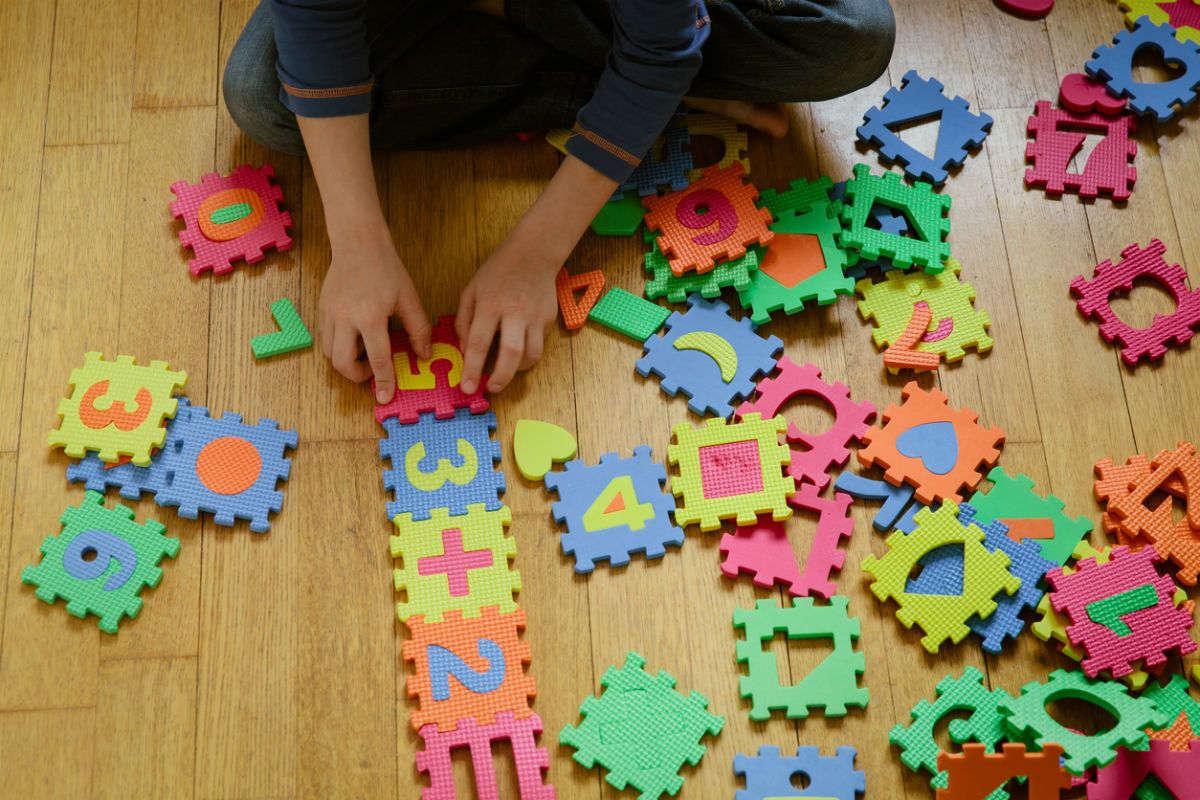
Preschool math skills grow naturally through everyday play. When your kiddo sorts blocks, counts snacks, or compares toy sizes, they are building early math foundations. You can support these skills at home with simple, playful moments that build confidence and curiosity.
What Preschool Math Skills Do Children Learn?
Preschoolers learn much more than counting. Early math includes thinking skills that support problem solving and school readiness.
Common preschool math skills include:
- Counting objects with one-to-one matching
- Recognizing numbers
- Sorting by color, size, or shape
- Comparing more and less
- Understanding patterns
- Exploring shapes and spatial awareness
- Measuring with simple words like longer and shorter
These skills are part of healthy child development and prepare children for kindergarten math.
KinderCare Takeaway: Math in preschool is about thinking and noticing, not worksheets.
How Does Everyday Play Build Math Skills?
Children learn best through play because it connects numbers and patterns to real-life experiences.
Here are simple examples:
- Building with blocks teaches balance, size, and spatial awareness
- Setting the table builds counting and one-to-one matching
- Playing store introduces numbers and comparison
- Clapping and singing games teach patterns and rhythm
- Sorting toys or laundry teaches grouping and classification
When math is hands-on, children understand it more deeply and remember it longer.
KinderCare Takeaway: Play turns abstract math ideas into real experiences children can see and touch.
How Can I Support Preschool Math Skills at Home?
No special tools required! Your daily routine offers many chances to build early math skills.
Try these ideas:
- Count steps as you walk together.
- Ask, “Which pile has more?” during cleanup.
- Notice and name shapes on signs, buildings, or everyday objects.
- Compare snack sizes and talk about what you notice.
- Create simple patterns with toys or crayons.
- Cook together and talk about what measuring means.
Keep your tone light and curious. Instead of testing for right answers, ask open questions like, “What do you notice?” or “How did you figure that out?”.
KinderCare Takeaway: Simple questions during everyday moments build strong thinking skills.
Why Is Early Math Important for Child Development?
Research from organizations like the National Association for the Education of Young Children (NAEYC) shows that early math skills are strong predictors of long-term academic success.
Math builds:
- Problem solving and logical thinking
- Focus and attention to detail
- Confidence in tackling new challenges
When children feel successful solving small problems, they develop a growth mindset.
KinderCare Takeaway: Early math builds confidence as much as it builds skills.
What Should Preschool Math Look Like?
Preschool math should feel playful and positive. It should not feel pressured or formal.
Look for signs your child is building skills:
- Counting objects accurately
- Noticing patterns
- Comparing sizes or amounts
- Asking number questions
- Using math words like bigger, smaller, and equal
Every child develops at their own pace. Progress matters more than speed.
KinderCare Takeaway: Math growth is steady and personal. Celebrate effort and curiosity.
How Do KinderCare Teachers Support Math Through Play?
At KinderCare, teachers build preschool math skills through guided play, structured routines, and hands-on activities. Children explore counting games, shape hunts, pattern building, and problem solving during daily learning blocks.
Teachers use:
- Small group activities
- Interactive questions
- Visual aids and manipulatives
- Real-life classroom routines
This approach supports learning, nurturing, community, and confidence.
Children see math as something they can do, not something to fear.
Keep Math Playful and Part of Everyday Life
You do not need flashcards or drills to teach preschool math. Every day play already offers powerful learning opportunities. When you notice, count, compare, and explore together, you are helping your child build a strong foundation.
If you would like to see how math learning through play works in action, explore KinderCare’s preschool programs and discover how our teachers support confident, capable learners every day.