Fun Ways to Explore Patterns and Sequences Through Everyday Play
Pattern activities for preschoolers help children recognize order, predict what comes next, and build important early math skills. The best part is that you can explore patterns and sequences during everyday routines, games, and playtime.
Long before children learn formal math concepts, they begin noticing patterns in the world around them. These early observations support problem-solving, critical thinking, and confidence as they learn.
What Are Patterns and Sequences?
Patterns are arrangements that repeat in a predictable way. Sequences are steps or events that happen in a specific order.
Children encounter patterns and sequences every day. They may notice the stripes on a shirt, the order of a bedtime routine, or the rhythm of a favorite song.
Examples include:
- Red, blue, red, blue blocks
- Clap, stomp, clap, stomp movements
- Wash hands, eat lunch, clean up
- Morning, afternoon, evening routines
Learning to recognize these patterns helps children make connections and understand how things work.
KinderCare Takeaway: Patterns and sequences help children build the foundation for future math and problem-solving skills.
Why Are Pattern Activities Important for Preschoolers?
Patterns encourage children to observe, compare, predict, and think logically. These are important skills that support learning across many subjects.
When children identify what comes next in a pattern, they are practicing early mathematical thinking. They are also strengthening memory, attention, and reasoning skills.
- Pattern play can help children:
- Build early math readiness
- Develop problem-solving skills
- Improve attention to detail
- Strengthen memory
- Increase confidence in learning
Simple pattern activities can create meaningful learning opportunities throughout the day.
KinderCare Takeaway: Recognizing patterns helps children become confident thinkers and learners.
How Can You Find Patterns During Daily Routines?
Many opportunities for pattern learning happen naturally during everyday activities.
Look for simple patterns your child can identify or help create.
During meals, try:
- Alternating fruit and crackers on a plate
- Creating color patterns with healthy snacks
- Taking turns arranging foods in a sequence
During routines, point out patterns such as:
- Brush teeth, wash face, put on pajamas
- Put away toys, choose a book, and read together
- Hang up the backpack, wash your hands, and sit for a snack
Talking about patterns during daily routines helps children see that math is part of everyday life.
KinderCare Takeaway: Daily routines are full of opportunities to explore patterns without adding extra tasks to your day.
What Pattern Games Can You Play at Home?
Hands-on activities make pattern learning fun and engaging.
Try these simple pattern activities for preschoolers:
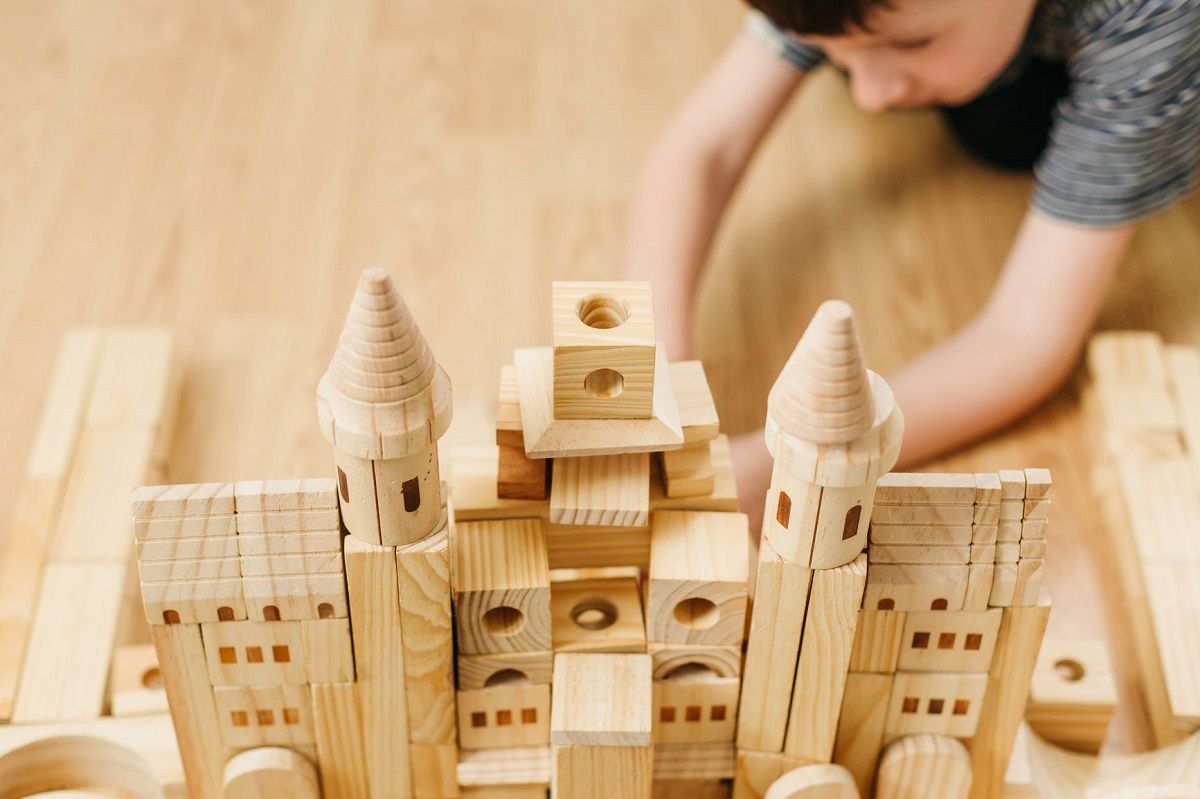
Build Block Patterns
Create a simple pattern using blocks and ask your child what comes next.
Examples:
- Red, blue, red, blue
- Small, large, small, large
- Square, circle, square, circle
Make Movement Patterns
Turn pattern practice into active play.
Try:
- Jump, clap, jump, clap
- Spin, hop, spin, hop
- March, march, stomp, march, march, stomp
Create Nature Patterns
Use leaves, rocks, flowers, or sticks to build repeating designs.
Ask questions such as:
- "What comes next?"
- "Can you make your own pattern?"
- "How is your pattern different?"
Explore Patterns Through Music
Songs naturally include repetition and predictable sequences.
Clapping rhythms, singing repeated lyrics, and following musical movements all help children recognize patterns.
KinderCare Takeaway: Play-based pattern activities help children learn while having fun.
How Do Sequences Help Children Learn?
Sequences teach children how events connect and happen in order. Understanding sequence helps children make sense of routines, stories, and everyday experiences.
You can practice sequencing by asking questions such as:
- What happened first?
- What happened next?
- What happened last?
Simple sequencing activities include:
- Retelling a favorite story
- Following a recipe together
- Talking about the steps in a daily routine
- Describing events from a recent outing
These conversations encourage children to organize their thoughts and understand cause and effect.
KinderCare Takeaway: Sequencing activities helps children strengthen memory, communication, and logical thinking.
When Should You Introduce Pattern Activities?
Pattern exploration can begin as soon as children start noticing similarities, differences, and routines.
Preschoolers often enjoy creating and extending simple patterns. As their skills grow, they can experiment with more complex combinations using colors, shapes, sounds, movements, and objects.
The goal is not perfection. The goal is to help children notice, predict, and explore.
KinderCare Takeaway: Every child develops at their own pace, and playful exploration is the best way to build confidence.
How KinderCare Encourages Early Math Thinking
At KinderCare, teachers weave pattern recognition and sequencing into everyday learning experiences. Through songs, stories, movement activities, classroom routines, and hands-on exploration, children build important early math skills in ways that feel natural and fun.
These experiences help children develop curiosity, confidence, and a strong foundation for future learning.
Frequently Asked Questions
What are simple pattern activities for preschoolers?
Simple activities include creating color patterns with blocks, clapping rhythms, arranging snacks, and identifying patterns in daily routines.
Why are patterns important for preschoolers?
Patterns support early math development, logical thinking, memory, and problem-solving skills that children will use throughout their education.
How can I teach patterns at home?
Use everyday objects, routines, songs, and games to help your child identify repeating sequences and predict what comes next.
What Can You Try Today?
Choose one daily routine and invite your child to identify a pattern or sequence. Whether you're setting the table, getting dressed, or singing a favorite song, these simple moments can help build important early math skills through play.
Explore KinderCare programs to see how our teachers help children discover math, problem-solving, and learning through engaging everyday experiences.