Easy Toddler Learning Activities to Try at Home
Looking for simple ways to support your toddler’s learning at home? Play-based activities are one of the most effective options! Everyday games can build language, problem-solving, and curiosity without needing special tools or long setups.
What are toddler learning activities?
Toddler learning activities are simple, hands-on ways to help children explore, think, and communicate through play. These activities focus on building early skills like language, motor control, and social interaction.
You don’t need formal lessons. Most learning at this age happens through:
- Repetition
- Exploration
- Everyday routines
KinderCare Takeaway: Learning for toddlers works best when it feels like play, not instruction.
Why learning through play matters
Play is how toddlers make sense of the world. It helps them test ideas, build confidence, and understand cause and effect.
Benefits of play-based learning include:
- Stronger language development through talking and listening
- Improved fine and gross motor skills
- Early problem-solving and decision-making
- Increased independence and confidence
KinderCare Takeaway: When toddlers are engaged and having fun, they are more open to learning new skills.
Easy toddler learning activities you can try today
These toddler activities at home are simple, low-prep, and highly effective.
1. Sorting and matching
Use everyday items like socks, blocks, or utensils.
Try this:
- Sort by color, size, or type
- Match pairs like socks or lids
- Talk through what your child is doing
Skills built:
- Categorization
- Vocabulary
- Attention to detail
KinderCare Takeaway: Sorting helps toddlers notice patterns and build early thinking skills.
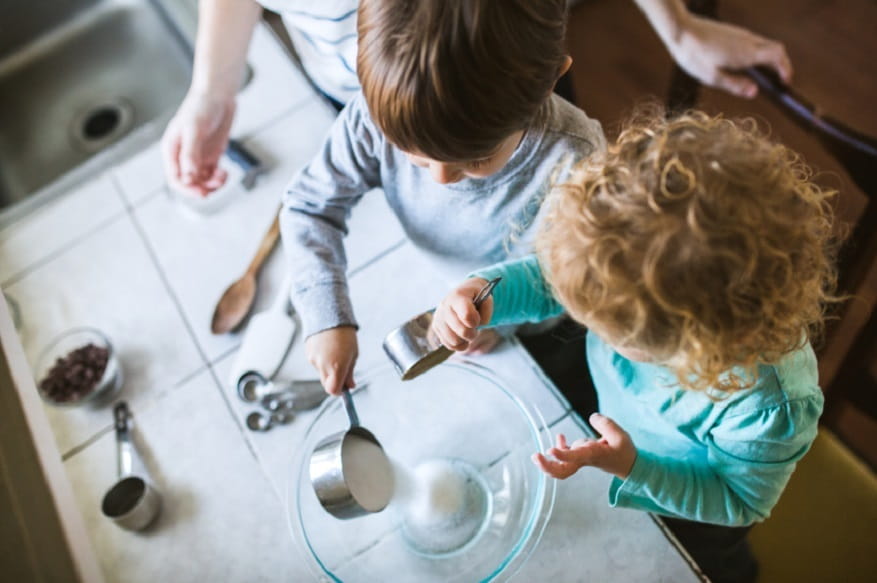
2. Sensory play with household items
Fill a bin with safe materials, such as rice, pasta, or water.
Try this:
- Scoop and pour with cups
- Hide small toys to find
- Describe textures together
Skills built:
- Fine motor skills
- Sensory awareness
- Language development
KinderCare Takeaway: Sensory play supports both physical coordination and early language.
3. Simple pretend play
Use dolls, stuffed animals, or kitchen items.
Try this:
- Feed a toy
- Act out bedtime routines
- Pretend to cook together
Skills built:
- Imagination
- Social understanding
- Communication
KinderCare Takeaway: Pretend play helps toddlers practice real-life situations safely.
4. Read and repeat
Reading is one of the best educational activities for toddlers.
Try this:
- Read the same book multiple times
- Ask simple questions like “Where is the dog?”
- Let your child point and name objects
Skills built:
- Vocabulary
- Listening skills
- Memory
KinderCare Takeaway: Repetition helps toddlers feel confident and understand new words faster.
5. Movement and action games
Toddlers learn through movement just as much as quiet play.
Try this:
- Follow-the-leader
- Simple obstacle courses
- Dance and freeze games
Skills built:
- Coordination
- Listening
- Body awareness
KinderCare Takeaway: Active play supports both physical growth and focus.
Tips for making toddler activities easier
Keeping activities simple helps both you and your child stay engaged.
- Follow your child’s interests instead of forcing an activity
- Keep sessions short, around 5 to 10 minutes
- Use items you already have at home
- Talk through what your child is doing to build language
- Repeat favorite activities often
KinderCare Takeaway: Consistency and simplicity matter more than variety or complexity.
Common challenges and what to do
It’s normal for toddlers to lose interest quickly or get frustrated.
Here’s what helps:
- If your child loses focus, switch activities or take a break
- If something feels too hard, simplify it
- If your child resists, try again later instead of pushing
You don’t need to do everything perfectly. Small moments of play add up over time.
KinderCare Takeaway: Short, positive experiences build confidence and keep learning enjoyable.
What to try next with your toddler
Start with one or two easy toddler activities and repeat them throughout the week. As your child becomes more comfortable, you can slowly add new variations.
Simple, consistent play at home can support your child’s growth in meaningful ways. If you’re looking for more structured support, KinderCare teachers use play-based learning every day to help children build skills, confidence, and curiosity. Contact us to explore how KinderCare classrooms bring these same play-based learning moments to life every day.
Frequently asked questions about toddler learning activities
What are the best learning activities for 2 year olds?
Simple activities like sorting, reading, pretend play, and movement games work best. They support language, coordination, and early thinking skills.
How long should toddler activities last?
Most toddlers benefit from short sessions, around 5 to 10 minutes. Follow your child’s attention span and adjust as needed.
Do toddlers need structured learning at home?
No. Toddlers learn best through play and everyday interactions. Structured lessons are not necessary at this stage.
How do I know if an activity is educational?
If your child is exploring, talking, moving, or solving simple problems, they are learning. Play-based activities naturally build important skills.
Can I use household items for toddler learning games?
Yes. Everyday items like cups, spoons, boxes, and books are great tools for learning through play.