At-Home Learning Activities for Babies
Times of uncertainty like these disrupt the schedule you’re trying to establish for your baby, and that can cause some anxiety. But times when you rely on each other for support and form stronger bonds as a family can also be rewarding experiences. We’re here to help you keep them in the learning mode with educational fun play that makes for great quality time together.
Our infant classrooms are exploring the theme “Amazing Animals” during the month of March. Children of all ages are fascinated with animals, both the wild ones and those of the pet variety! This theme gets your baby learning through sensory activities and active songs. The key to getting the most out of the learning is to verbalize what you’re doing so they can associate words with things and actions.
Here are some activities you can do at home that help develop all the skills we try to build at KinderCare:
Physical development and wellness
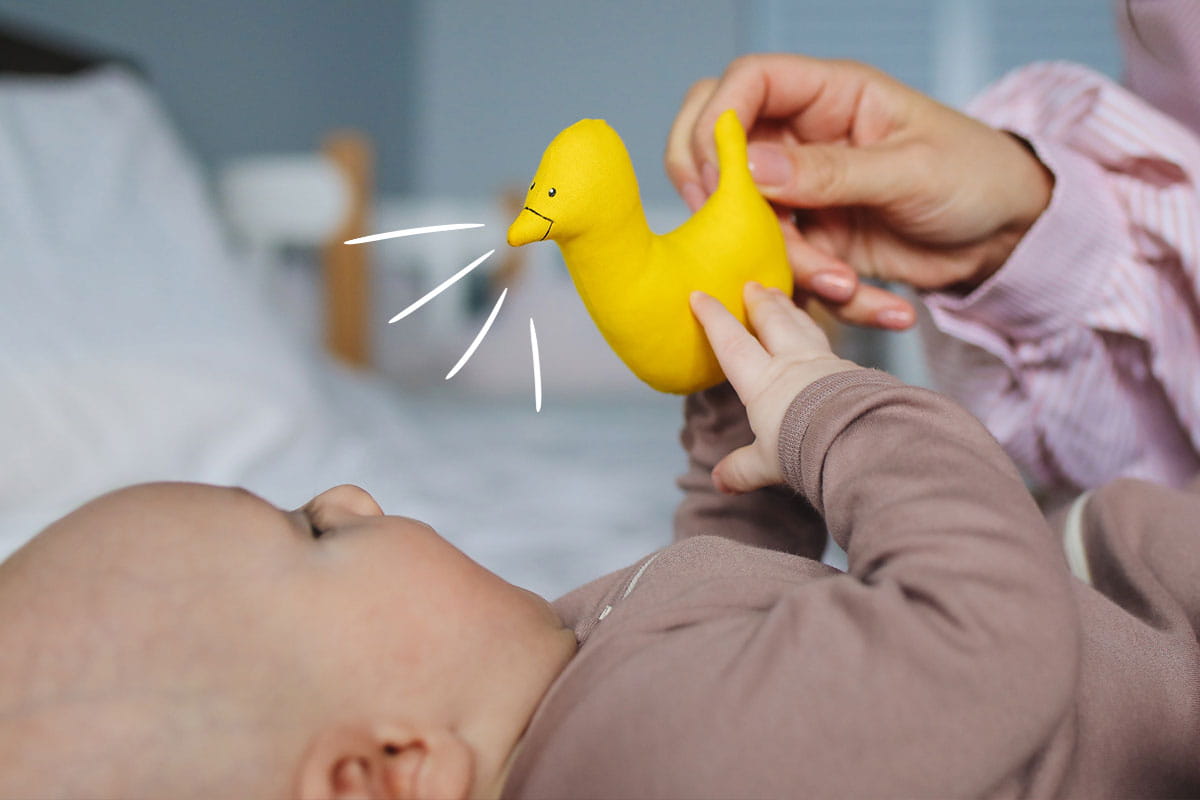
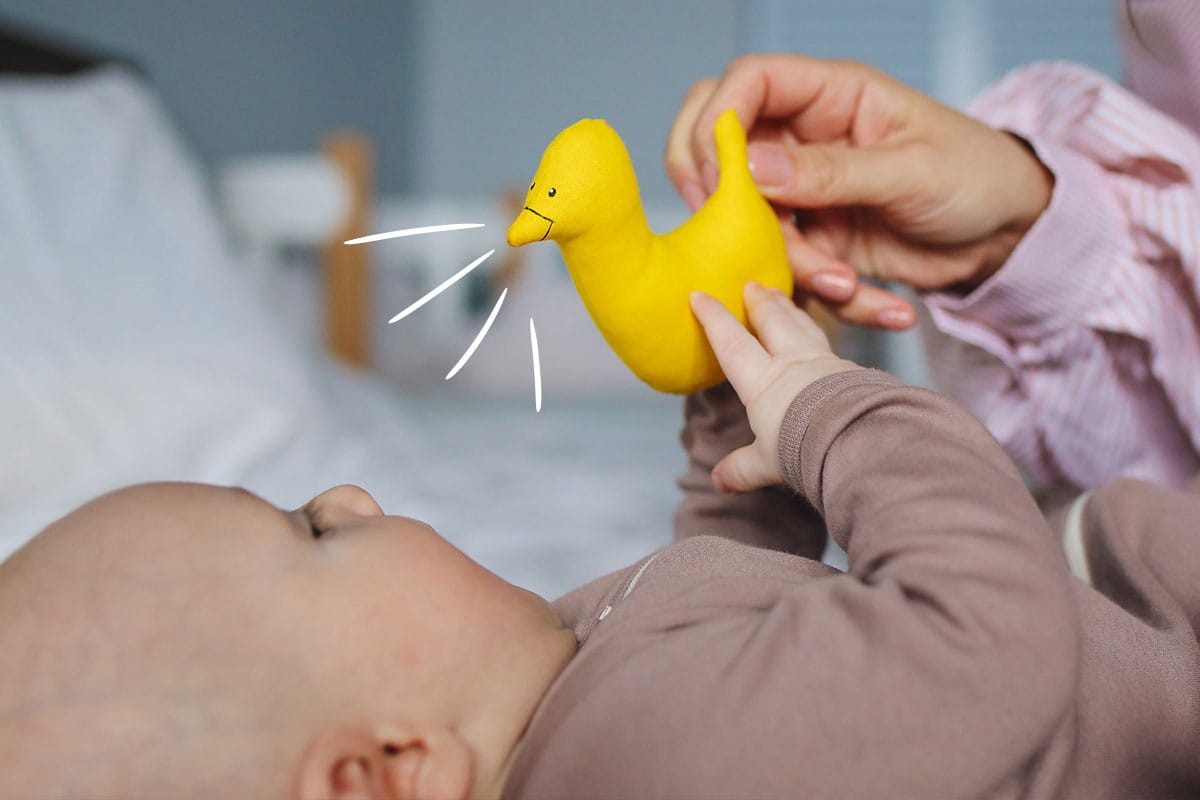
Sit with your baby and show them a rattle.
Slowly move it in their line of sight. Watch as your baby follows the rattle with their eyes. Shake the rattle and see how they respond. Give your baby the rattle and ask them to interact. “Can you shake the rattle? You are really shaking the rattle!” With an older baby, try hiding the rattle behind another toy and shaking it. Again, ask them to interact, “Do you hear the rattle? Where is it? Can you find the rattle?”
Slowly move it in their line of sight. Watch as your baby follows the rattle with their eyes. Shake the rattle and see how they respond. Give your baby the rattle and ask them to interact. “Can you shake the rattle? You are really shaking the rattle!” With an older baby, try hiding the rattle behind another toy and shaking it. Again, ask them to interact, “Do you hear the rattle? Where is it? Can you find the rattle?”
Make a sensory bottle for your baby by putting beads or other small objects and water inside.
Screw on the lid, then wrap masking tape around the lid a few times to secure. With your baby lying, sitting, or standing, hold the bottle just beyond his or her reach. Encourage your baby to reach for the bottle. When they reach for the bottle, celebrate and show them how the objects inside move when the bottle is moved.
Screw on the lid, then wrap masking tape around the lid a few times to secure. With your baby lying, sitting, or standing, hold the bottle just beyond his or her reach. Encourage your baby to reach for the bottle. When they reach for the bottle, celebrate and show them how the objects inside move when the bottle is moved.
Have a block-stacking party with your baby.
Show them how to stack the blocks. “Let’s try stacking these blocks. To stack blocks, we put them on top of each other, like this.” When the block stack is two or more blocks high, invite your baby to knock it over. With this activity, it’s hard to tell if the party is more in the excitement of stacking, or in the thrill of knocking down!
Show them how to stack the blocks. “Let’s try stacking these blocks. To stack blocks, we put them on top of each other, like this.” When the block stack is two or more blocks high, invite your baby to knock it over. With this activity, it’s hard to tell if the party is more in the excitement of stacking, or in the thrill of knocking down!
Language and literacy
Read books to your baby that feature animals of all kinds.
Mimic the sound the animal makes and see if your baby tries to imitate it. “What is this animal on the cover of the book? This book is about a kitty. Where is the kitty in the book? What do kitties say? Kitties say, ‘meow, meow!’”
Mimic the sound the animal makes and see if your baby tries to imitate it. “What is this animal on the cover of the book? This book is about a kitty. Where is the kitty in the book? What do kitties say? Kitties say, ‘meow, meow!’”
Have a play date—just you and your baby!
Find a comfy spot to sit near them on the floor. Place toys within reach. When your baby chooses a toy, have a conversation about it. “What toy do you have? You have the blue car. I have a little person. Will my little person fit in your car? Let’s see.” Rich language experiences like this help expand the number of words your baby gets to hear in a day, and that really gets those language neurons firing!
Find a comfy spot to sit near them on the floor. Place toys within reach. When your baby chooses a toy, have a conversation about it. “What toy do you have? You have the blue car. I have a little person. Will my little person fit in your car? Let’s see.” Rich language experiences like this help expand the number of words your baby gets to hear in a day, and that really gets those language neurons firing!
Social and emotional
Put a stuffed animal (or a few!) in a container and invite your baby to take the animal out again.
Make a game out of it by putting the animal back in again and having them take it out again. “Can you take the animal out of the container? Can you put it back in?” Show your baby how to take the animal out of the container and put it back in, if needed. This activity sets the stage for completing more challenging tasks later on.
Make a game out of it by putting the animal back in again and having them take it out again. “Can you take the animal out of the container? Can you put it back in?” Show your baby how to take the animal out of the container and put it back in, if needed. This activity sets the stage for completing more challenging tasks later on.
While dressing your baby or putting those elusive socks back on, talk about what you’re doing.
Say, for example, “We are putting your pants on, so your legs stay warm. Would you like to help?” Continue dressing your baby, talking with them about different clothing items.
Say, for example, “We are putting your pants on, so your legs stay warm. Would you like to help?” Continue dressing your baby, talking with them about different clothing items.
Memory and focus
Partially fill a small tub of water* with rubber or plastic toy animals (if you have them) or other waterproof items.
Invite your baby to reach into the water and explore the toys. “How can you make the animals (or toys) swim?” This activity works with sand, too!
Invite your baby to reach into the water and explore the toys. “How can you make the animals (or toys) swim?” This activity works with sand, too!
*Safety first! Always supervise a baby around water.
When you’re outside with your baby, name the animals you see and hear.
Try imitating those sounds with them. “Listen. What is making that sound? It’s a bird! Do you see the bird in the tree?”
Try imitating those sounds with them. “Listen. What is making that sound? It’s a bird! Do you see the bird in the tree?”
Exploring different textures is appealing to many babies.
Help your baby explore items from around the house that are soft, smooth, and scratchy, such as a blanket, table top, and sandpaper. “This is your blanket. How does it feel in your hands? Your blanket is soft.”
Help your baby explore items from around the house that are soft, smooth, and scratchy, such as a blanket, table top, and sandpaper. “This is your blanket. How does it feel in your hands? Your blanket is soft.”
Babies love to watch and imitate simple actions.
Play a game of copycat by performing actions such as clapping hands, making faces, or making sounds. While you play, talk with your baby about the game. “I am clapping my hands and you are clapping your hands. I see you are patting your legs, now I am patting mine!”
Play a game of copycat by performing actions such as clapping hands, making faces, or making sounds. While you play, talk with your baby about the game. “I am clapping my hands and you are clapping your hands. I see you are patting your legs, now I am patting mine!”
Creative expression
Sing a rendition of their favorite children’s song with lyrics about animals.
Give your baby a rattle or other noisemaking toy to shake and move while you sing. “Let’s sing a song about animals. You can shake your rattle and move your body while we sing.”
Give your baby a rattle or other noisemaking toy to shake and move while you sing. “Let’s sing a song about animals. You can shake your rattle and move your body while we sing.”
Do you have clothing or fabric at home in bright colors, animal prints, or faux fur?
Show your child the colors and patterns and talk about their characteristics while you explore. “You are holding a piece of fabric that has black and white stripes. What does it feel like?”
Show your child the colors and patterns and talk about their characteristics while you explore. “You are holding a piece of fabric that has black and white stripes. What does it feel like?”