
Simple Building Activities That Strengthen Early Engineering Skills
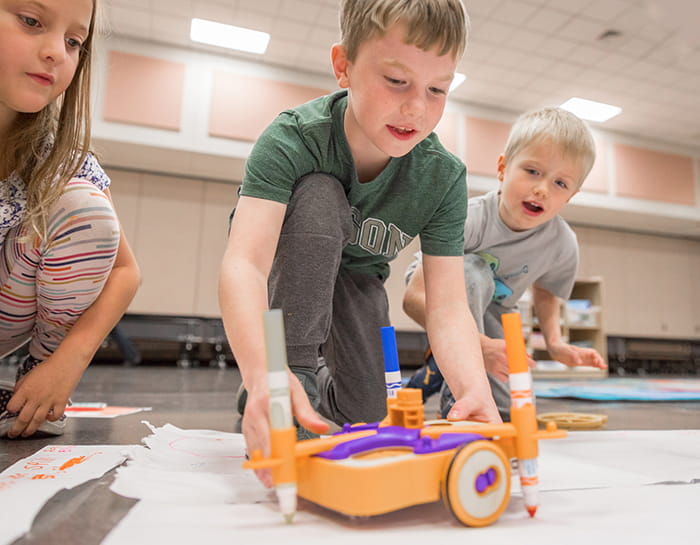
Engineering activities for kids help children explore how things work through hands-on play . Simple building projects can strengthen problem-solving, creativity, balance, and critical thinking while helping children feel more confident trying new ideas.
Young children learn engineering skills naturally when they build, test, adjust, and try again. Everyday materials and open-ended activities often create the best learning opportunities.
Why Building Activities Matter for Young Children
Engineering is about solving problems and figuring out how things fit together. When children build towers, bridges, ramps, or forts, they practice important early learning skills.
Building activities can support:
- Problem-solving
- Spatial awareness
- Fine motor skills
- Patience and persistence
- Early math and science understanding
- Creativity and teamwork
Children also learn that mistakes are part of the learning process.
KinderCare Takeaway: Building activities help children build confidence by encouraging trial-and-error in a fun, supportive way.
Build Tall Towers With Everyday Materials
Tower-building activities help children explore balance, height, and stability.
You can use:
- Blocks
- Plastic cups
- Cardboard boxes
- Recycled containers
- Books or pillows for larger builds
Encourage your child to test different ideas by asking:
- “How can we make it taller?”
- “What helps the tower stay strong?”
- “What happens if we use bigger blocks on the bottom?”
Simple questions help children think through challenges without giving them the answer right away.
Create Bridges for Toy Cars
Bridge-building activities introduce children to structural and weight-supporting principles.
Try using:
- Craft sticks
- Paper tubes
- Building blocks
- Tape
- Cardboard
Challenge your child to build a bridge strong enough for toy cars or small stuffed animals.
You can explore:
- Which shapes feel strongest
- What happens when the bridge is too long
- How supports help hold weight
KinderCare Takeaway: Asking children to test and improve their ideas builds problem-solving skills over time.
Explore Ramps and Motion
Ramp activities help children learn about speed, movement, and angles.
Use simple materials like:
- Cardboard
- Books
- Toy cars
- Balls
- Wooden blocks
Invite your child to test questions such as:
- “Which ramp makes the car go faster?”
- “What happens if the ramp is steeper?”
- “How can we make the ball roll farther?”
Hands-on experiments encourage children to make predictions and observe results.
Try a Building Challenge
Try challenges like:
- Build a tower taller than your child
- Create a bridge that holds five toy cars
- Build a house for a stuffed animal
- Design a marble path using tubes or boxes
- Make a structure using only paper and tape
These activities encourage flexible thinking and creativity while keeping learning playful.
Use Outdoor Materials for Creative Builds
Nature can provide great building materials for early engineering play.
Children can build with:
- Sticks
- Rocks
- Sand
- Leaves
- Pinecones
Outdoor building encourages children to think differently about size, texture, and balance.
For example, children might:
- Stack rocks carefully
- Build small stick shelters
- Create paths or obstacle courses
- Design shapes in the sand
KinderCare Takeaway: Open-ended building activities help children learn that there can be more than one solution to a problem.
Let Your Child Lead the Process
It can be tempting to fix a structure or show children the “right” way to build. But giving children space to experiment supports deeper learning.
- Ask open-ended questions
- Encourage effort instead of perfection
- Let children solve small problems independently
- Celebrate creative ideas
Children learn important engineering skills when they test ideas, make changes, and keep trying.
What to Do When Frustration Happens
Building challenges can sometimes feel difficult for young children. Frustration is a normal part of learning.
You can help by:
- Breaking tasks into smaller steps
- Offering encouragement
- Modeling calm problem-solving
- Taking short breaks when needed
Phrases like “Let’s try another way” or “What could we change?” help children stay engaged and confident.
How Engineering Play Supports School Readiness
Early engineering activities help children practice skills they will use in school and everyday life.
These activities support:
- Focus and attention
- Communication skills
- Planning and sequencing
- Early STEM learning
- Collaboration with others
Children also begin learning how to think critically and work through challenges step by step.
Helping Your Child Learn Through Building and Play
Simple engineering activities give children opportunities to explore, create, and solve problems through hands-on learning. Whether your child is stacking blocks, building bridges, or testing ramps, each activity helps strengthen important early learning skills .
At KinderCare, children explore STEM concepts through play , creativity, and guided discovery every day. Explore our programs to see how we help children build confidence, curiosity, and problem-solving skills from an early age.
FAQs About Engineering Activities for Kids
What are engineering activities for kids?
Engineering activities help children solve problems through building, testing, and creating. Common activities include building towers, designing ramps, and creating simple structures.
What age can children start engineering activities?
Children can begin simple engineering play during the toddler and preschool years. Activities can be adjusted based on age, skill level, and interest.
Do engineering activities help with learning?
Yes. Engineering play supports early math, science, problem-solving, communication, and fine motor skills while encouraging creativity and persistence.
What materials work best for engineering play at home?
Simple materials like blocks, cardboard, cups, tape, paper tubes, and recycled containers work well for hands-on engineering activities.